

How fast do weight loss injections work?
Weight loss injections work within 1 to 2 weeks. Visible weight loss often begins around 3 to 6 weeks, while more steady and sustainable fat loss usually develops by 8 to 12 weeks.
Weight loss injections are not instant fat burners.
They work by changing how your body responds to hunger, food and energy over time.
That is why early progress can feel confusing. The scale may not move right away, even though important changes are already happening beneath the surface.
Once you understand this timeline, the question shifts from “Why is nothing happening?” to “What is already changing?”
This guide explains how fast weight loss injections work, what changes to expect first and how medical supervision can make those results safer and more sustainable.
What are weight loss injections?
Weight loss injections are doctor-prescribed treatments that work with your body’s hormones to regulate appetite, blood sugar and metabolism. They help you feel fuller sooner and reduce constant hunger.
Unlike supplements or over-the-counter products, weight loss injections are backed by clinical research and approved as FDA-approved weight loss medications. Supplements often rely on caffeine or herbal blends and do not change how your body regulates hunger. These injections do. That is why they are prescription-only and medically supervised. A provider monitors dosing, side effects and progress to keep results safe, effective and sustainable.
How do weight loss injections work inside the body?
Weight loss injections work by changing how your body regulates hunger, fullness and blood sugar.
They do not force weight loss. They support the systems that are often working against you. This is why the changes feel different from dieting alone.
GLP-1 hormones and appetite control
These injections act as a GLP-1 receptor agonist. GLP-1 is one of your natural appetite regulation hormones. It plays a key role in how your brain and gut communicate.
GLP-1 works in both the gut and the brain to control appetite and fullness. It slows how quickly food leaves the stomach and sends signals to the brain that reduce hunger.
When GLP-1 is activated, your brain receives stronger signals that you are full.
This affects the hunger signaling pathways that drive cravings and constant thoughts about food.
You feel satisfied sooner. You stay full longer. This satiety hormone response helps reduce overeating without relying on willpower.
Effects on blood sugar, insulin and metabolism
Weight loss injections also improve how your body handles blood sugar.
They support insulin sensitivity improvement, which helps your cells use energy more efficiently. This leads to better blood sugar stabilization throughout the day.
When insulin resistance is present, glucose stays in the bloodstream instead of being used for energy. The body responds by producing more insulin, which keeps the body in fat-storage mode.
For many people with insulin resistance, unstable blood sugar makes weight loss very difficult. The body stays in storage mode.
By improving insulin response, weight loss injections help lower excess insulin levels that keep the body in fat-storage mode. When insulin signals become more balanced, cells can access stored fat for energy more easily, making weight loss more consistent and easier to maintain over time.
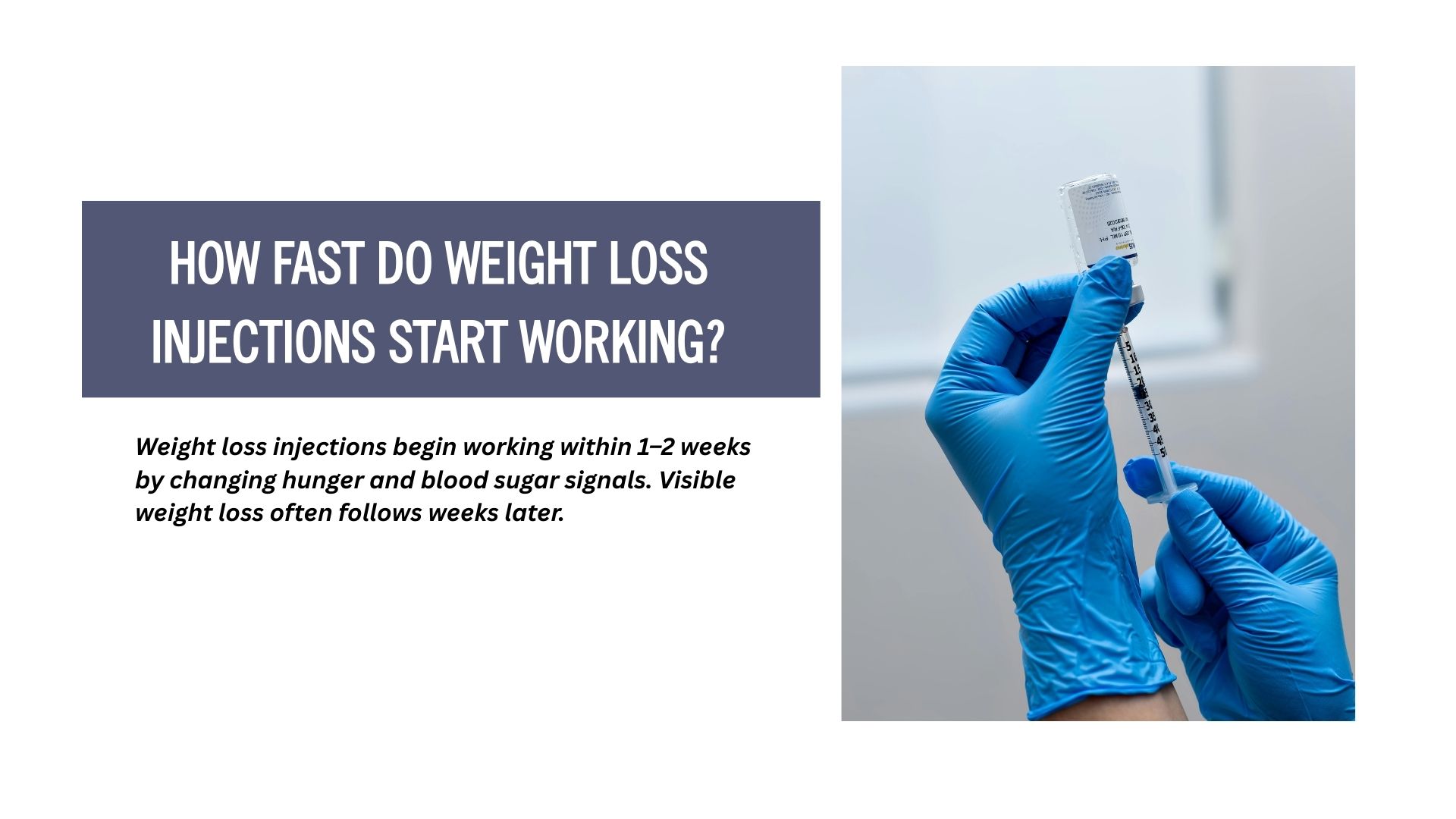
How fast do weight loss injections start working?
Weight loss injections often start working within the first one to two weeks.
The earliest changes are usually internal rather than visible on the scale.
As hormones and metabolism begin to stabilise, visible weight loss tends to follow over the next few weeks.
Week 1–2: Appetite Reduction
The first signs usually appear within the first one to two weeks.
Appetite reduction often begins early. In research trials, people receiving injectable semaglutide reduced their calorie intake by 24–35%, even without intentional calorie restriction.
You may also notice early digestive changes.
Feeling full sooner or staying full longer is common. For many, this is the moment they realize that when appetite will decrease is not months away. It is often one of the first changes to appear.
Weeks 3–6: Visible Weight Loss Begins
Between weeks three and six, physical changes often become more noticeable.
This is when the weight loss injection results timeline starts to feel real. The scale may begin to move more consistently. Clothes may fit differently. Some people notice improved energy as blood sugar becomes more stable.
How much weight you lose in the first month varies.
Factors like starting weight, insulin resistance and lifestyle support all matter.
Weeks 8–12 and beyond: Sustainable Fat Loss
After the first two to three months, weight loss tends to feel steadier and more predictable.
Fat loss becomes more consistent rather than rapid. This is when long-term weight management begins to take shape.
Metabolic improvements continue to build over time. Appetite regulation becomes more stable. Blood sugar control improves. Because this is a weekly injectable weight loss medication, dose titration plays a key role in both results and tolerance. When supported properly, this approach leads to sustainable medical weight loss rather than short-term drops that are hard to maintain.
What affects how fast weight loss injections work?
Even when two people use the same medication, their results can look very different.
That is because your body brings its own history into the process.
Hormones, metabolism and daily habits all influence how quickly results show. Understanding these factors helps explain why progress feels fast for some and slower for others.
Your starting metabolic health
If your metabolism has been under strain for a long time, weight loss usually takes longer to appear. Conditions like insulin resistance or metabolic dysfunction tell the body to store energy rather than release it.
Weight loss injections help improve these signals, but your body still needs time to shift out of storage mode and into fat-burning mode.
Hormonal patterns behind weight gain
Hormonal weight gain linked to stress, aging or life transitions changes how hunger and fat storage are regulated. Cortisol, estrogen shifts and insulin all influence where and how weight is held.
Injections support appetite and insulin hormones, but when multiple hormones are involved, early progress can feel slower while balance is being restored.
Your dieting history
If you have spent years dieting or restricting calories, your metabolism may have adapted to conserve energy. This lowers metabolic efficiency and makes weight loss harder, even with strong effort.
Weight loss injections help correct hunger and fullness signals, but your body needs time to trust that food is available again before it releases stored fat.
Nutrition, sleep and daily movement
Medication works best when it is supported, not isolated. Adequate protein helps protect muscle and keeps metabolism active. Poor sleep and chronic stress disrupt hunger hormones and increase fat storage signals.
Gentle, consistent movement improves insulin sensitivity and helps the body use energy more efficiently, even without intense exercise.
Dose progression and consistency
Weight loss injections are increased gradually to reduce side effects and protect your body. Because of this, appetite changes and weight loss are not always linear at the start.
A medically supervised plan adjusts dosing safely and helps set realistic expectations. Steady progress supports metabolism and leads to results that are easier to maintain long-term.
Comparing common weight loss injections: How fast does each option work?
All weight loss injections work through similar hormonal pathways, but the speed at which changes feel noticeable can vary slightly. These differences are linked to how strongly each medication affects appetite hormones, blood sugar regulation and how long it stays active in the body.
How fast does Semaglutide work for weight loss?
Most people start noticing changes from semaglutide within the first one to two weeks, mainly as reduced appetite and quieter food thoughts.
This happens because semaglutide strongly activates the GLP-1 hormone pathway, which slows digestion and sends stronger fullness signals to the brain.
As hunger decreases, portion sizes naturally reduce, and steady weight loss usually follows over the next several weeks.
How fast does Tirzepatide work for weight loss?
Tirzepatide may feel slightly faster for some people, with appetite and blood sugar changes often noticeable within the first one to two weeks.
The reason is that tirzepatide supports more than one hormone pathway involved in appetite and insulin regulation.
This broader hormonal effect can lead to stronger early appetite control and improved blood sugar handling, especially in people with insulin resistance or prediabetes.
How fast does Liraglutide work for weight loss?
With liraglutide, appetite changes tend to build more gradually, often over two to four weeks, depending on daily dosing consistency.
Liraglutide works through the same GLP-1 pathway but has a shorter duration of action. Because it is taken daily, results rely more on consistent use, and weight loss may feel steadier but slower compared to weekly injections.
Summary: How fast do common weight loss injections workk?
| Medication | How fast changes often start | Why timing may differ |
| Semaglutide | 1 to 2 weeks | Strong, steady GLP-1 appetite signalling |
| Tirzepatide | 1 to 2 weeks, sometimes earlier | Multiple hormone pathways affect appetite and blood sugar |
| Liraglutide | 2 to 4 weeks | Shorter-acting GLP-1 effect and daily dosing |
Who typically sees the best results from weight loss injections?
In practice, weight loss injections tend to work best for people whose weight gain is driven by hormones or metabolic changes rather than lifestyle alone.
People who often respond well include:
- Women with hormonal weight gain, especially related to stress, perimenopause, menopause or weight gain after 40, when hormone shifts affect appetite and metabolism.
- People with insulin resistance or prediabetes, where unstable blood sugar makes fat loss difficult, even with healthy eating.
- Those who have already tried “doing everything right,” including clean eating and regular exercise, but still struggle because the issue is biological, not behavioural.
For these profiles, weight loss injections help remove the internal barriers that make progress feel stalled, allowing consistent effort to finally lead to results.
What Weight Loss Injections DO NOT Do
Weight loss injections can be powerful, but they are often misunderstood. Setting realistic weight loss
expectations are essential for long-term success.
- These treatments are not instant fat burners. They do not cause rapid or dramatic weight loss overnight. Instead, they support appetite regulation and metabolic health, so fat loss can happen gradually and safely.
- They also do not replace nutrition or daily habits. Food quality, protein intake, sleep and stress still matter. Injections make these changes feel more manageable, not unnecessary. When habits are ignored, results tend to slow.
- Plateaus can still occur. Weight loss is not linear, even with medication. The body adapts over time, especially if stress increases or routines slip. With proper support and guidance, plateaus are usually temporary and part of a normal, sustainable weight loss process.
Why Medical Supervision Changes Weight Loss Results
When weight loss injections are started with limited medical oversight, important signals can be missed.
Without lab testing or ongoing adjustments, hormone imbalances, insulin resistance or stress-related weight gain can go unaddressed.
This often shows up as slow progress, frustrating plateaus, low energy or side effects that feel harder than they should.
With KC Wellness, your care goes beyond the prescription.
You receive a physician-led, lab-guided plan designed around your hormones, blood sugar, metabolism and stress patterns. Dosing and support are adjusted as your body responds, with a focus on protecting your energy and muscle while supporting steady fat loss. The experience feels guided, personalized and built for results you can maintain long term.
How KC Wellness Supports Faster, Safer Weight Loss
At KC Wellness, weight loss injections are never treated as a standalone solution.
Your plan is built around your hormones, metabolism, lifestyle and long-term health, so progress feels more predictable and less stressful. Care continues well beyond the prescription, with regular monitoring and adjustments to keep results safe, steady, and sustainable.
What makes KC Wellness different:
- Physician-led care focused on hormonal and metabolic drivers of weight gain.
- Lab-guided treatment plans that assess hormones, blood sugar and metabolic markers.
- Ongoing dose adjustments based on how your body responds, not a fixed protocol.
- Hormone-aware weight loss approach that supports metabolism and energy, not just appetite.
- Long-term weight management focus that prioritises muscle, energy and maintainable results.
Frequently Asked Questions About Weight Loss Injections
How quickly can you lose weight on injections?
Most people notice appetite changes within one to two weeks, with visible weight loss typically beginning over the following several weeks as hormones and metabolism stabilise. Results vary based on your body, dose progression and whether care is medically supervised.
Can Ozempic make you lose weight in two weeks?
In the first two weeks, weight loss is usually minimal, but many people notice reduced appetite and less food noise. Meaningful fat loss tends to occur gradually over time rather than immediately.
How long does it take for a weight loss shot to kick in?
Weight loss injections usually begin working within the first one to two weeks by calming hunger signals and improving fullness. Scale changes often follow later as the body adjusts.
How fast can I lose 20 pounds on semaglutide?
Losing 20 pounds on semaglutide commonly takes several months and depends on starting weight, metabolism and consistency with treatment. Faster loss is not always better and may increase the risk of fatigue or muscle loss.
How long does it take for semaglutide to suppress appetite?
Semaglutide often starts suppressing appetite within the first one to two weeks as GLP-1 signalling increases. The effect usually strengthens as the dose is gradually increased.

Dr. Rahul Kapur, M.D. is a board-certified family medicine physician with a dedicated passion for integrative medicine and a deep knowledge of functional medicine. He was named intern of the year at Wesley Medical Center in Wichita, KS, and has been practicing as a hospitalist for over a decade. He has successfully helped many patients in Kansas City with his specialized IV bags, ketamine therapy, hormone optimization and weight loss therapy methods.