
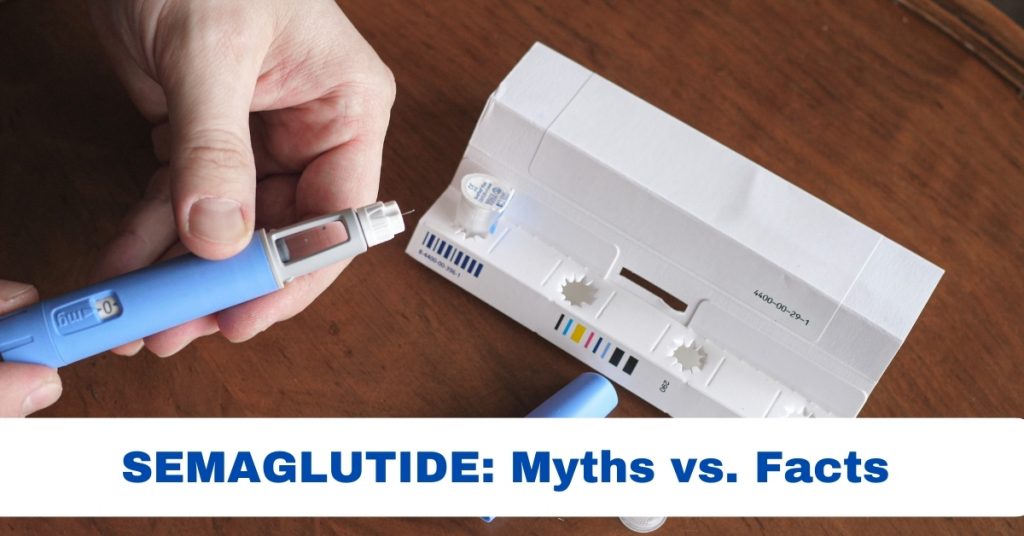
Semaglutide has become a widely discussed option for weight management, but increased attention has also created confusion about what the medication does, who it is for and what patients should expect.
Some claims make semaglutide sound like a quick fix. Others suggest it is only a diabetes medication or that lifestyle habits no longer matter once treatment begins. The reality is more nuanced.
Here are several common semaglutide myths and the facts patients should understand when considering medically supervised treatment.

Myth #1: Semaglutide Is Just Another Diet Pill
Fact: Semaglutide is a prescription GLP-1 receptor agonist, not an over-the-counter diet supplement.
GLP-1 medications affect biological signals involved in appetite, fullness and blood sugar regulation. Semaglutide works through the GLP-1 pathway and can help some patients feel less hungry or satisfied sooner.
Specific semaglutide products also have different approved uses. semaglutide, for example, is approved for chronic weight management in certain patients.
That makes semaglutide different from supplements or products marketed primarily around appetite suppression without the same prescription-medication framework.
For a deeper explanation of the mechanism and early treatment experience, see how semaglutide works for weight loss.

Myth #2: Semaglutide Is Only for People With Diabetes
Fact: Certain semaglutide products are also used for chronic weight management.
Semaglutide was initially widely recognized because of its use in type 2 diabetes care, but not every semaglutide product has the same indication.
The National Institute of Diabetes and Digestive and Kidney Diseases lists semaglutide among prescription medications used for chronic weight management. It also explains that weight-management medications may be considered as part of treatment for certain people with overweight or obesity. NIDDK guidance on prescription weight-management medications
That does not mean semaglutide is appropriate for everyone who wants to lose weight. Individual health history, medications and treatment goals still need to be evaluated.
Myth #3: You Do Not Need to Change Your Eating or Activity Habits
Fact: Semaglutide is intended to support weight management, not replace the other parts of it.
Prescription weight-management medications are generally used alongside nutrition, physical activity and sustainable behavioral changes.
The NIDDK notes that these medications do not replace healthy eating or physical activity and tend to work best when combined with a lifestyle program.
Semaglutide may make certain changes easier by reducing hunger or helping patients feel satisfied sooner, but the medication does not make nutrition, hydration, physical activity or other health habits irrelevant.
Our guide on whether weight loss injections work without diet and exercise explores that question in more detail.

Myth #4: Semaglutide Should Produce Immediate Weight Loss
Fact: Treatment is gradual, and the response varies from person to person.
Some patients notice appetite changes before they notice a meaningful change on the scale. Others may respond more gradually.
Semaglutide is also typically started at a lower dose and increased according to a prescribed schedule. This gradual escalation gives the body time to adjust and allows the provider to evaluate tolerability.
The current semaglutide prescribing information uses a stepwise dose-escalation schedule rather than beginning immediately at the maintenance dose. semaglutide prescribing information on DailyMed
Patients should therefore avoid comparing their first few weeks of treatment with another person’s experience or expecting a specific amount of weight loss by a certain date.
Myth #5: A Higher Dose Will Make Semaglutide Work Faster
Fact: More medication does not automatically mean better or faster results.
Semaglutide dosing follows a treatment schedule for a reason.
Increasing the dose too quickly or using more than prescribed can increase the likelihood of side effects and does not necessarily lead to better weight-loss results.
Treatment decisions should be based on how the individual patient responds, whether side effects remain manageable and whether the medication continues to fit the overall treatment plan.
Patients should not change their dose without discussing it with the prescribing provider.

Myth #6: Side Effects Mean Semaglutide Is Unsafe
Fact: Semaglutide can cause side effects, but safety cannot be judged from the presence or absence of one symptom alone.
Common side effects can include gastrointestinal symptoms such as nausea, vomiting, diarrhea, constipation and abdominal discomfort.
There are also more serious warnings and contraindications that need to be considered before and during treatment.
The important distinction is that common side effects, serious risks and individual contraindications are not the same thing.
Whether semaglutide is appropriate depends on the patient’s medical history, other medications, risk factors and response to treatment.
Because detailed medication safety is a separate topic, patients with questions about contraindications, serious risks or monitoring can review our guide on whether weight loss injections are safe.
Myth #7: Once You Lose Weight, It Will Automatically Stay Off After Stopping Semaglutide
Fact: Weight regain can occur after treatment ends.
Weight management is a long-term process, and the biological factors that contributed to weight gain do not necessarily disappear when medication is stopped.
In the STEP 1 trial extension, participants who discontinued semaglutide after the initial treatment period regained a substantial portion of their previous weight loss during the following year. The researchers noted that the findings highlight the chronic nature of obesity and the importance of long-term weight-management strategies. STEP 1 semaglutide withdrawal study
That does not mean every patient will regain the same amount of weight or that medication must continue indefinitely.
It does mean that stopping treatment should be considered as part of an ongoing weight-management plan rather than assuming the medication permanently changes the body’s weight-regulation system.
Myth #8: Semaglutide Works the Same Way for Everyone
Fact: Individual response can vary significantly.
Two patients using the same medication may experience different appetite changes, side effects and weight trends.
Differences can be influenced by factors such as:
- Medical history
- Other medications
- Nutrition
- Activity
- Sleep
- Stress
- Treatment adherence
- Dose tolerance
- Other health conditions
This variation is one reason a single person’s experience should not be treated as a prediction of what someone else will experience.
It is also why medical follow-up matters throughout treatment.

Why Does Medical Supervision Matter With Semaglutide?
Semaglutide is a prescription medication, so treatment should involve more than receiving a prescription and checking the scale.
Medical supervision can help providers evaluate:
- Whether semaglutide is appropriate
- Current medications and possible interactions
- Treatment response
- Side effects and tolerability
- Dose progression
- Nutrition and hydration concerns
- Changes in health or treatment goals
Regular follow-up also creates an opportunity to reassess the plan when results, symptoms or circumstances change.
What Should Patients Take Away From Semaglutide Myths and Facts?
The biggest misconception about semaglutide is that it can be reduced to a simple choice between “quick fix” and “dangerous shortcut.”
Neither description reflects how prescription weight-management treatment actually works.
Semaglutide can be a useful treatment option for appropriately selected patients, but results vary, lifestyle habits still matter, dosing should be medically directed and long-term planning remains important.
The goal is not simply to use semaglutide. It is to determine whether the medication makes sense within the individual patient’s broader health and weight-management plan.
KC Medical & Wellness Center provides semaglutide treatment in Kansas City within a medically supervised approach that considers health history, medications, goals and treatment response.
If you are considering semaglutide and want to discuss whether it may fit your individual needs, request a consultation with KC Medical & Wellness Center.
Your provider will discuss which option is appropriate.

Dr. Rahul Kapur, M.D., is a board-certified family medicine physician who has practiced as a hospitalist for over a decade and leads hormone optimization and medical weight loss care at KC Medical & Wellness Center.