

If stubborn belly fat appeared right as your periods became irregular, the timing isn’t a coincidence.
Menopause changes how your metabolism works and where your body holds weight.
It’s a shift many women notice in their 40s and 50s, often alongside fatigue, sleep changes or mood swings.
This guide explains what causes weight gain during menopause and what steps can help you regain control of your body and weight.
KC Wellness has 70+ years of experience evaluating estrogen, progesterone, testosterone, insulin, cortisol and thyroid markers to identify the biological drivers of menopause-related weight gain.
Book a consultation to get clear answers about your weight changes.
What Causes Weight Gain During Menopause
Weight gain during menopause is mainly caused by the following:
- Declining estrogen
- Slower metabolism
- Loss of muscle mass
- Shifts in how your body stores fat
How Hormones Affect Weight During Menopause
Hormones regulate appetite, fat storage, metabolism and muscle, so changes during menopause impact weight more easily.
During menopause, different hormonal shifts also happen. Your estrogen, progesterone and testosterone decline and insulin levels shift.
Together, these hormone changes create the hormonal imbalance and weight gain that many women notice in midlife. Below, we will discuss more about how hormones affect menopausal weight gain:
Estrogen decline and fat distribution
Estrogen plays a major role in how your body stores fat, especially around the hips and thighs.
When estrogen levels drop during menopause, that pattern shifts. Your body becomes more likely to store fat in the abdomen, even if you aren’t eating more than usual.
How lower estrogen changes fat storage and activates visceral fat
Lower estrogen also reduces your ability to use fat for energy and increases the activity of enzymes that store fat in the belly area.
Research supports this pattern and shows another important layer. After menopause, visceral fat (deep belly fat) becomes more hormonally active and starts producing more estrone (a type of estrogen) as abdominal fat increases.
This means belly fat becomes easier to gain and harder to lose because it responds to estrogen decline and then begins making its own estrogen. If this shift feels new or frustrating, it is simply your body adapting to hormonal change.
Progesterone changes and fluid retention
When progesterone drops, your body becomes more prone to bloating and water retention.
This is a common cause of menopause bloating that makes weight gain feel more noticeable, even when fat hasn’t actually increased.
Testosterone decline and muscle loss
Testosterone is one of the hormones that drops during menopause.
When this happens, your body naturally loses muscle mass.
With less muscle, your metabolism slows, making weight gain easier even when your habits haven’t changed.
This loss of strength can also contribute to fatigue, a common symptom tied to muscle loss and metabolic slowdown during menopause.
Cortisol imbalance from chronic stress
Midlife stress raises cortisol, a hormone that signals your body to store more fat, especially in the belly.
High cortisol also interferes with insulin and appetite regulation, which can increase cravings and make weight easier to gain.
These shifts explain why cortisol and weight gain often go hand in hand during menopause, especially for women experiencing chronic stress.
Age-Related Changes That Add to Menopausal Weight Gain
Alongside hormonal shifts, natural age-related changes make weight gain during menopause even more likely.
The following factors explain how aging adds to weight gain during menopause:
Natural decline in muscle mass (sarcopenia)
As you lose muscle with age, your body burns fewer calories at rest, making weight easier to gain.
How sarcopenia affects weight
Sarcopenia is a natural age-related muscle loss. Because muscle burns more calories than fat, losing muscle lowers your resting metabolic rate, which is the amount of energy your body burns at rest. This makes gaining weight during menopause easier.
Changes in how the body uses and stores glucose
When estrogen drops during menopause, your cells can become less sensitive to insulin.
This is why, for some women, menopause can cause insulin resistance.
With insulin resistance, glucose stays in the bloodstream longer, and your body releases even more insulin to try to manage it. Higher insulin levels make it easier to store glucose as fat, especially around the abdomen.

Lifestyle and Environmental Factors That Worsen Weight Gain During Menopause
Lifestyle and environment can make weight gain easier during midlife, especially when your hormones start to shift.
In the next sections, we will look at how stress, sleep, eating habits, movement and everyday exposures each play a role.
Sleep disturbances
Poor sleep changes the hormones that control hunger, so you feel hungrier even when your body does not need more food. If sleep has become harder during menopause, these shifts are simply your body’s way of adapting to changing hormones.
Lower physical activity over time
As stress, responsibilities and fatigue build over time, it becomes easier to move less and exercise less often. When this happens, muscle loss speeds up, especially during menopause, and your body burns fewer calories even at rest.
Emotional eating, cravings and mood shifts
Shifts in serotonin and dopamine during menopause can change your appetite and make cravings feel stronger. These brain chemicals affect mood and comfort, which is why you may notice more comfort eating during stressful moments.
Medical Conditions That May Increase Weight Gain During Menopause
Medical conditions can also influence weight gain during menopause because they interact with the same hormones that control metabolism, energy and blood sugar.
Thyroid disorders
Low thyroid hormones slow down energy production and reduce your metabolic rate. This means your body burns fewer calories at rest and may hold on to more weight even if your eating or activity habits have not changed.
Chronic inflammation
Chronic inflammation raises cortisol and disrupts insulin signaling. This combination increases fat storage, affects appetite and makes it harder for your body to manage blood sugar during menopause.
PCOS
Women with a history of PCOS often carry long-term insulin resistance and higher androgen levels. These hormone patterns can continue into midlife and make metabolic syndrome and weight gain more likely during menopause.
Symptoms of Weight Gain During Menopause
Menopause can bring changes that feel confusing, especially when your weight starts to shift for reasons you cannot see.
The hormones that once helped control appetite, fat storage and energy begin to rise and fall, and your body reacts to these changes.
The signs below can help you understand how these hormone shifts may be affecting your weight.
- Increased abdominal fat
- Slower metabolism
- Lower muscle tone
- Fatigue and low energy
- Increased cravings
- Sleep disruption
If you are seeing these signs, your body is responding to real hormonal shifts, and you deserve clarity and support as you move through them.
Can hormone therapy help with weight gain during menopause?
Hormone therapy can help with menopause-related weight gain because it supports the hormones that guide your metabolism, appetite and fat storage.
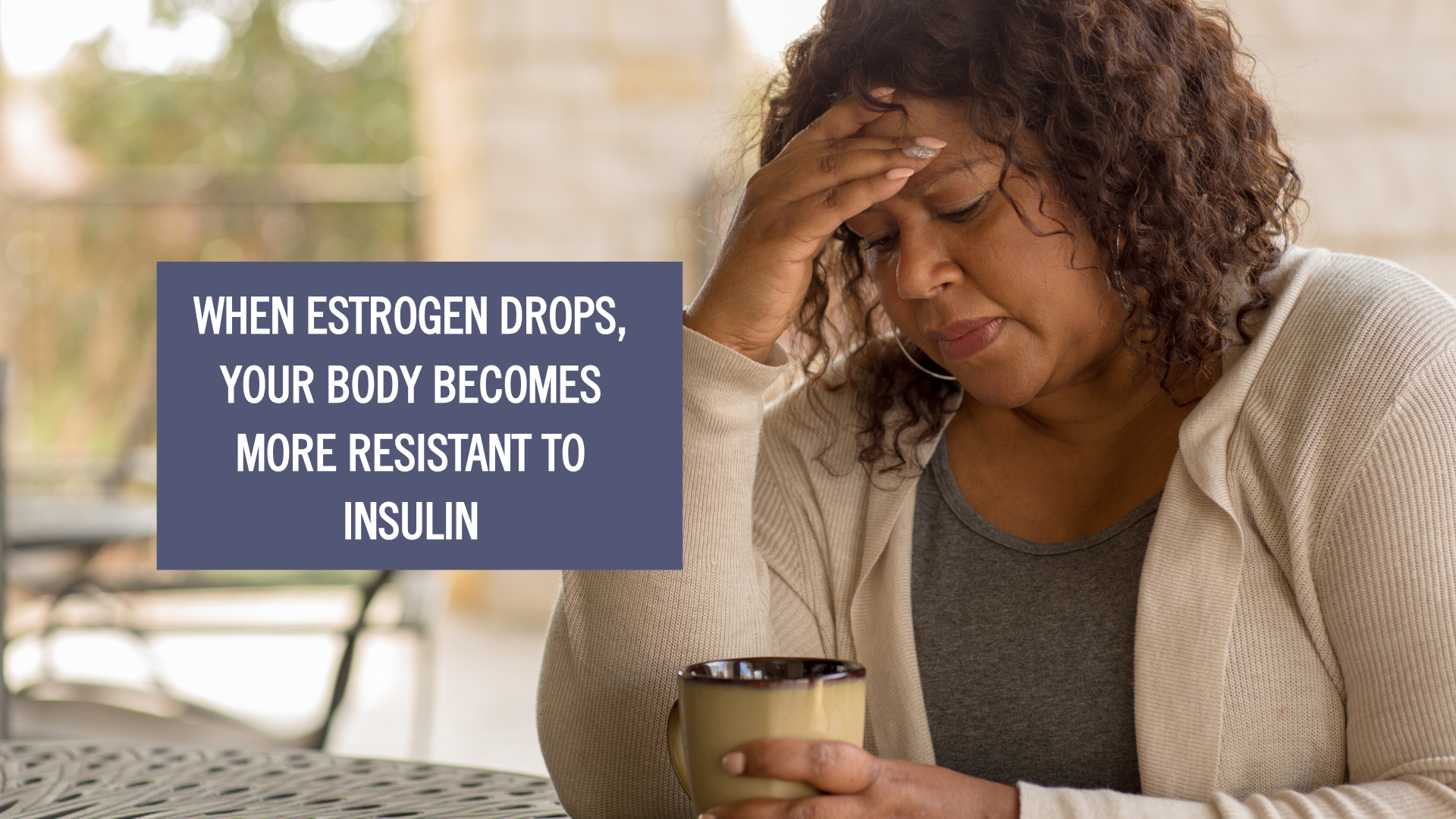
When estrogen drops, your body becomes more resistant to insulin and more likely to store fat around the abdomen. Research shows that estrogen therapy can reduce visceral fat and improve insulin sensitivity in midlife women. Stabilizing these hormone levels can make it easier for your body to use energy the way it once did.
How does hormone therapy support metabolism?
Stabilizing estrogen levels helps your body regulate appetite, fat storage and energy use in a steadier way. Improving insulin sensitivity helps your cells use glucose again, which can reduce midsection fat gain triggered by menopause.
Reducing visceral fat accumulation supports better metabolic health and may lower the risks linked to long-term belly fat.
If weight has changed in ways that feel new or hard to control, hormone therapy may help your metabolism work more smoothly again.
When To Consider Hormone Testing
Comprehensive hormone testing evaluates estrogen, progesterone, testosterone, insulin, cortisol and thyroid markers to identify the biological drivers of menopause-related weight gain.
You may want to consider hormone testing if you notice:
- Persistent symptoms
- Significant weight change
- Low energy, mood changes or sleep issues
KC Wellness clinicians bring over 70 years of combined experience using functional and integrative medicine to diagnose, monitor and treat menopause-related metabolic changes with ongoing lab-guided care.
You’re Not Losing Control. Your Body Is Changing.
Menopause weight gain is a biological response to changing hormones, and your body is doing its best to adjust.
When you understand these changes, it becomes easier to support your metabolism in a way that finally makes sense.
Hormone testing and a whole-body approach can guide you toward restoring balance and feeling like yourself again.
At KC Wellness, we use functional and integrative medicine, personalized hormone testing and decades of medical experience to understand what your body needs during menopause.
Your treatment plan is tailored to your symptoms and focused on real hormonal balance.
Book a consultation. Ask our team.
FAQs
Why do women gain weight during menopause?
Menopause weight gain is driven by declining estrogen, slower metabolism, muscle loss and changes in insulin sensitivity. These shifts cause the body to store more fat, especially around the abdomen, even without eating more or exercising less.
Does menopause cause belly fat specifically?
Yes. Lower estrogen during menopause shifts fat storage from the hips and thighs to the abdomen. This increases visceral fat, which is hormonally active and harder to lose than subcutaneous fat, making belly weight gain more common in midlife.
How does estrogen affect weight during menopause?
Estrogen regulates fat distribution, insulin sensitivity and metabolism. When estrogen declines, the body burns fewer calories at rest and stores fat more easily, particularly in the abdominal area, contributing to menopause-related weight gain.
Can menopause slow your metabolism?
Yes. Menopause slows metabolism through hormone changes and age-related muscle loss. Less muscle reduces resting calorie burn, while hormonal shifts impair how efficiently the body uses glucose and fat for energy.
Does menopause cause insulin resistance?
Menopause can increase insulin resistance due to estrogen decline. Reduced insulin sensitivity makes it easier for the body to store glucose as fat, especially around the abdomen, even with an unchanged diet and activity.
Is weight gain during menopause inevitable?
Weight gain during menopause is common but not inevitable. Understanding hormonal changes allows targeted strategies, such as hormone testing, metabolic support, strength training and medical therapy, to reduce or reverse weight gain.

Dr. Rahul Kapur, M.D. is a board-certified family medicine physician with a dedicated passion for integrative medicine and a deep knowledge of functional medicine. He was named intern of the year at Wesley Medical Center in Wichita, KS, and has been practicing as a hospitalist for over a decade. He has successfully helped many patients in Kansas City with his specialized IV bags, ketamine therapy, hormone optimization and weight loss therapy methods.
