

Do weight loss injections work for hormonal weight gain?
Yes. Weight loss injections work for hormonal weight gain by reducing appetite and improving insulin response. Many people notice appetite changes within one to two weeks, with gradual, steady weight loss developing over the following months as hormones stabilize. You’re eating well. You’re staying active. And yet the weight keeps creeping on. When hormones are driving the problem, effort alone is often not enough. That is why more people are turning to weight loss injections for hormonal weight gain. These treatments are designed to work with your hormones, not fight against them. This guide explains how weight loss injections support hormonal weight gain, who they help most and what realistic progress can look like.Why hormonal weight gain feels different
Hormones influence how your body stores fat, how hungry you feel and how efficiently you use energy. When these signals are out of balance, the body is more likely to hold on to weight, even when habits look healthy. Hormonal weight gain often shows up as:- Weight gain despite diet and exercise.
- Increased belly fat that feels hard to shift.
- Constant hunger or strong cravings.
- Fatigue or low energy, even with healthy habits.
- Sudden weight changes during stress or life transitions.
What causes hormonal weight gain?
Hormonal weight gain is usually driven by changes inside the body, not a lack of effort. Several systems work together to influence how fat is stored, how hungry you feel and how easy it is to lose weight. When these systems are out of balance, weight gain can feel stubborn and unpredictable.Insulin resistance
Insulin resistance makes it harder for your body to use sugar for energy. Instead of being burned, that energy is stored as fat. This process blocks fat loss and keeps the body in storage mode, even when calories are reduced.Blood sugar dysregulation
Unstable blood sugar also drives cravings. When levels rise and fall quickly, hunger returns sooner and feels more intense. Over time, this cycle contributes to metabolic dysfunction. Supporting blood sugar stabilization is often a key step in addressing hormonal weight gain.Stress, cortisol and fat storage
Stress affects weight more than many people realize. When stress levels stay high, the body releases cortisol. This hormone signals the body to store energy, especially around the abdomen. This is why cortisol and weight gain are closely linked. Chronic stress can also slow metabolism and disrupt appetite signals. Stress-related weight gain often continues even when food choices are healthy. Without addressing stress hormones, weight loss can feel like an uphill battle.Shifts in female hormone
Female hormones play a major role in where fat is stored and how the body responds to food. Shifts in estrogen can change fat distribution, leading to more weight around the midsection. This pattern is common in hormonal weight gain in women. During perimenopause, hormone levels fluctuate unpredictably. During menopause, estrogen levels decline more steadily. Both phases can make weight gain easier and weight loss harder. These changes are biological and common, not a personal failure. Understanding them helps explain why a different approach is often needed.Do weight loss injections work for hormonal weight gain?
For many people, yes. Weight loss injections can be an effective hormonal weight loss treatment because they target the signals that are often disrupted when hormones are driving weight gain.How do weight loss injections work for hormonal weight gain work?
Weight loss injections work by supporting the hormonal systems that often make weight gain feel out of control. They do not force the body to lose weight. They help restore signals that regulate hunger, fullness and metabolism so weight loss becomes possible again.They restore hormonal signals that control hunger and fullness
Weight loss injections for hormonal weight gain work by supporting key appetite hormones, especially the GLP-1 pathway, which plays a central role in hunger, fullness and metabolic control. They do not force weight loss. Instead, they help repair disrupted hormone signalling so your body can respond normally to food again.GLP-1 signalling and hypothalamic appetite regulation
GLP-1 affects appetite and weight by acting on receptors in both the gut and the brain, including the hypothalamus, which is the body’s main appetite control center. This signalling slows how quickly food leaves the stomach, increases feelings of fullness and reduces hunger-stimulating signals like excess ghrelin. In simple terms, these injections help your brain receive clearer messages that you are full. When hunger and fullness signals work properly again, eating feels calmer and weight loss becomes more achievable.They mimic GLP-1 hormones to reduce appetite and food noise
These treatments act as GLP-1 receptor agonists. This means they mimic a natural hormone that helps the brain and gut communicate about hunger and fullness. When this pathway is activated, hunger signals become quieter. Many people notice less food noise and fewer constant thoughts about eating. You feel full sooner. You stay satisfied longer. This happens without relying on constant willpower.They improve insulin sensitivity to support metabolism
Weight loss injections also improve how your body responds to insulin. When insulin works more effectively, your body uses energy instead of storing it as fat. This reduces the hormonal signals that drive ongoing fat storage. Over time, blood sugar levels become steadier. Insulin responses stabilize. Energy levels feel more consistent. This gradual support helps create the conditions for sustainable fat loss rather than short-term weight changes.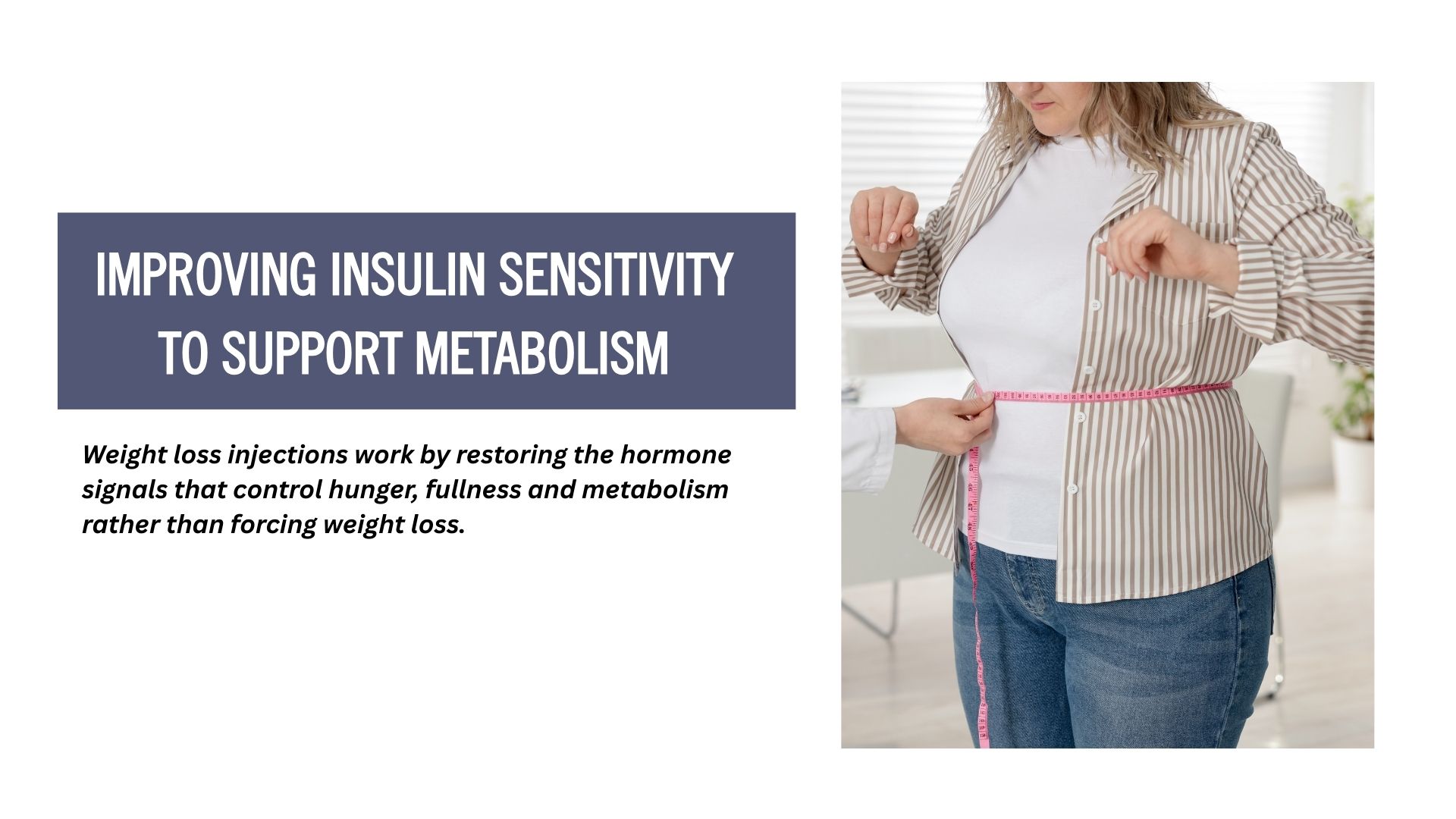
How fast do weight loss injections work for hormonal weight gain?
Weight loss injections for hormonal weight gain usually start working within the first one to two weeks by calming appetite signals and reducing food noise. Visible weight changes often follow over the next several weeks as hormonal balance and metabolism begin to stabilize.Early weeks: Appetite and craving changes
In the first few weeks, many people notice quieter hunger signals. The constant urge to snack or think about food often eases. This marks the start of the appetite suppression timeline. For those asking how fast weight loss injections work for hormonal weight gain, appetite regulation is usually the first shift to appear. Emotional eating may also decrease during this phase. When hunger hormones are better regulated, food choices feel more intentional rather than reactive.Weeks 4–8: Weight and energy shifts
Between weeks four and eight, changes often become more visible. Hormonal weight loss results tend to show as gradual weight loss rather than sudden drops. Clothing may fit differently. Energy and focus may improve as blood sugar becomes more stable. This stage reflects the broader weight loss injections results timeline. Progress feels steadier and less exhausting than past attempts.3 months and beyond: Metabolic reset
After the first few months, fat loss often becomes more consistent. Hormonal signals continue to stabilize, making weight management feel more manageable. This phase supports sustainable medical weight loss rather than quick fixes. With ongoing support, hormonal regulation improves over time. This creates a foundation for long-term weight management care, helping results last beyond the initial weight loss phase.Which hormonal conditions respond best to weight loss injections?
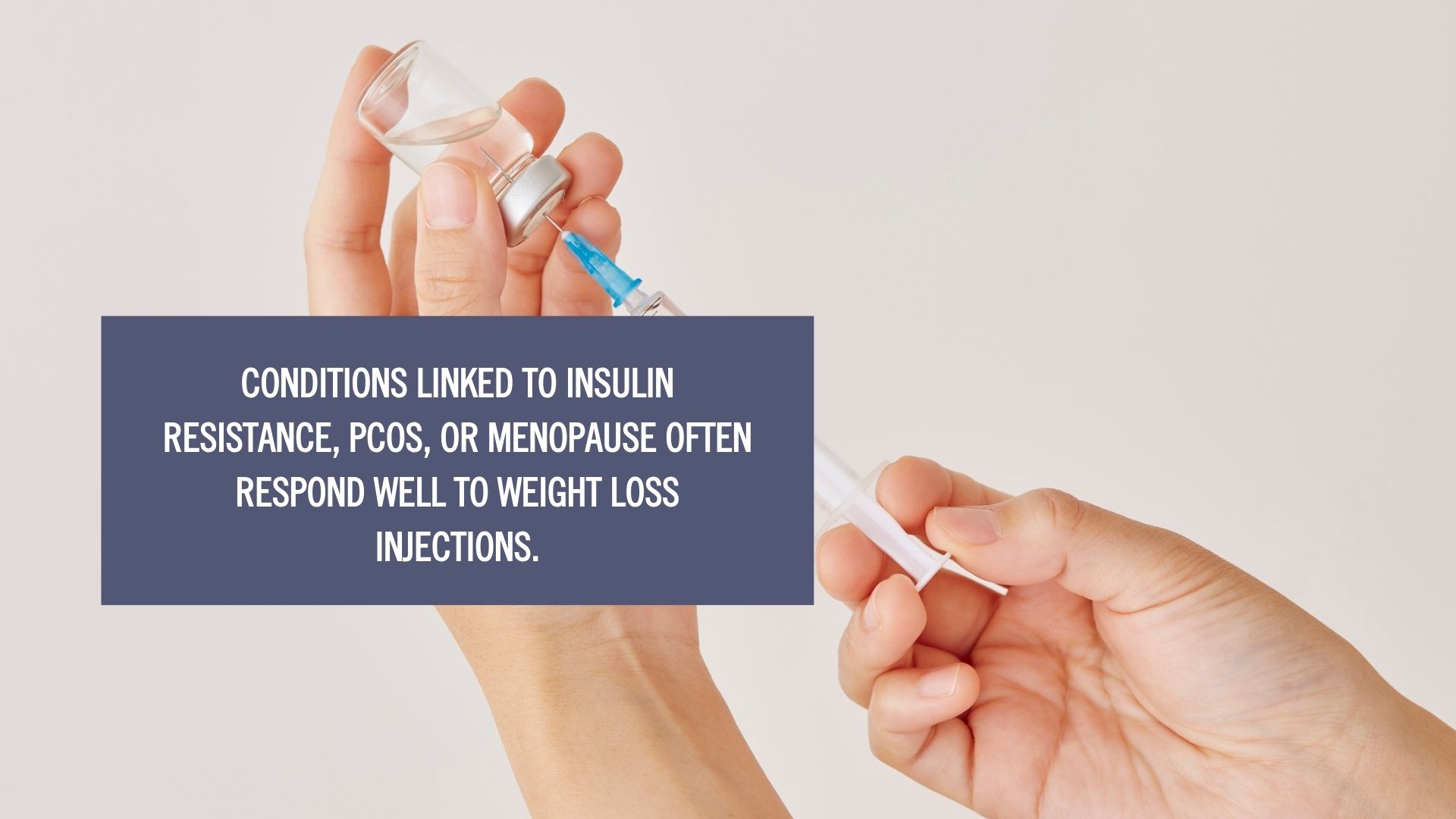
- Insulin resistance or difficulty managing blood sugar.
- Prediabetes or early metabolic changes.
- Weight gain during perimenopause or menopause.
- PCOS-related weight gain with insulin imbalance.
- Weight gain that persists despite consistent dieting and exercise.
Insulin resistance and blood sugar imbalance
Insulin resistance is one of the hormonal conditions that responds most consistently to weight loss injections. When insulin does not work efficiently, the body is more likely to store fat and struggle with appetite control, even with healthy habits in place.Insulin sensitivity and glucose metabolism regulation
GLP-1 receptor agonists improve how the body releases and responds to insulin after meals while reducing excess glucose production by the liver. This helps restore normal glucose metabolism and reduces fat storage driven by chronic insulin imbalance. In simple terms, these injections help your body use sugar for energy instead of storing it as fat. For people with insulin resistance or prediabetes, this often leads to steadier energy, better appetite control, and more reliable weight loss progress.Prediabetes and early metabolic changes
Early blood sugar changes can make weight gain feel hard to control. When insulin is not working properly, the body is more likely to store fat instead of using it for energy. Weight loss injections help by improving blood sugar control and insulin response. In studies of people with obesity who did not have diabetes, injectable semaglutide led to an average weight loss of nearly 12%, showing that improving early metabolic problems can support steady, sustainable weight loss before diabetes develops.Perimenopause and menopause-related weight gain
Hormonal shifts during perimenopause and menopause change how fat is stored and how hunger signals behave. Weight loss injections for menopause weight gain help stabilise appetite hormones and support gradual, steady progress during this transition.PCOS-related weight gain with insulin imbalance
PCOS often involves both hormonal disruption and insulin resistance. This combination can make weight loss especially difficult. Weight loss injections respond well in this condition because they target both appetite and insulin imbalance. They improve insulin sensitivity, lower excess insulin signals, and reduce constant hunger driven by hormone disruption. In studies of women with PCOS who did not lose weight with diet and lifestyle changes alone, once-weekly semaglutide injections led to meaningful weight loss in nearly 80% of patients. These changes help explain why PCOS-related weight gain often responds well when weight loss plans support both metabolic and hormonal regulation.Weight gain that persists despite diet and exercise
When weight gain continues despite consistent nutrition and activity, hormones are often involved. Weight loss injections help restore the signals that regulate hunger, fullness and fat storage. This allows healthy habits to finally produce results instead of constant frustration.Comparing weight loss injections for hormonal weight gain
Not all weight loss injections work in exactly the same way. Each option targets hormones differently, which can affect how your body responds. Semaglutide vs Tirzepatide vs Liraglutide All three are considered GLP-1 weight loss injections, but they act on the body through slightly different hormone pathways.- Semaglutide focuses on GLP-1 receptors that regulate appetite and fullness.
- Tirzepatide targets more than one hormone pathway, which may lead to stronger effects on appetite and blood sugar for some people.
- Liraglutide works on similar pathways but is usually taken as a daily injection.
What weight loss injections DO NOT fix alone
Weight loss injections can be a powerful tool, but they are not a cure for every hormonal issue. Setting realistic weight loss expectations helps avoid disappointment and supports long-term success. Weight loss injections do not address every factor involved in hormonal weight gain, including:- Hormone deficiencies, such as low estrogen or progesterone.
- Chronic stress or elevated cortisol levels.
- Poor sleep quality or irregular sleep patterns.
- Muscle loss or low muscle mass.
- Emotional or lifestyle triggers that affect eating habits.
Side effects and safety of weight loss injections for hormonal weight gain
Most side effects of weight loss injections are mild and digestive-related, especially during the early stages of treatment. Common side effects may include:- Nausea
- Bloating
- Constipation
- Feeling overly full
- Reduced appetite that feels uncomfortable at first
- Slow dose increases: Gradual titration gives your digestive system and hormones time to adapt.
- Medical screening: This helps identify conditions or sensitivities that may affect suitability.
- Ongoing medical guidance: Adjustments can be made if side effects persist or feel disruptive.
Why hormone-aware medical supervision matters
Hormonal weight gain is complex. And that is often why it feels so frustrating. What works for one person may do very little for another, even when the effort is there. That is where hormone-aware medical supervision makes a real difference.It looks beyond the prescription.
Instead of focusing only on the prescription, a physician-led wellness clinic looks at what is actually happening inside your body.It uses lab-guided insights to personalize care.
Lab-guided care uses blood work to assess hormones, insulin response and key metabolic markers. This helps your provider understand why your body is holding on to weight and how it is responding over time.It adapts as your body changes.
As your body changes, your care can change too. Dose, timing and support may be adjusted based on hormone levels, stress load and progress. This is the foundation of a functional medicine weight loss approach. It focuses on root causes, not just symptoms.It protects muscle, energy and long-term health.
Medical supervision also protects your energy and muscle mass. Rapid or unsupported weight loss can lead to fatigue and muscle loss, which can slow metabolism over time. By monitoring these risks, a metabolic weight loss clinic supports steady progress that keeps you strong, energized and able to maintain results long term.How KC Wellness treats hormonal weight gain differently
Hormonal weight gain needs more than a standard prescription. KC Wellness starts with a personalized weight loss plan that looks at hormones, metabolism, lifestyle and health history together. This hormone-aware weight loss approach helps match treatment to how your body actually functions. The focus is long-term balance, not quick fixes. KC Wellness prioritizes steady progress that protects metabolism, energy and muscle. This commitment to long-term weight management care helps results feel sustainable and realistic, not temporary or overwhelming. Book a weight loss consultationFAQs
Do weight loss injections work for menopause weight gain?
Yes, for many women, they can help. Menopause affects appetite and insulin response, and weight loss injections for women support these signals to make weight loss more manageable.Why did my weight gain start after 40?
After 40, hormone levels shift and metabolism slows. Changes in estrogen, insulin sensitivity and stress hormones all contribute to hormonal weight gain, even with healthy habits.Can injections help if diet and exercise stopped working?
Yes. When hormones drive weight gain, lifestyle changes alone may not be enough. Weight loss injections help restore appetite and blood sugar regulation, so diet and exercise can work again.How long do I need to stay on treatment?
There is no set timeline. Duration depends on hormonal health, goals and how well weight is maintained over time with medical supervision.
Dr. Rahul Kapur, M.D. is a board-certified family medicine physician with a dedicated passion for integrative medicine and a deep knowledge of functional medicine. He was named intern of the year at Wesley Medical Center in Wichita, KS, and has been practicing as a hospitalist for over a decade. He has successfully helped many patients in Kansas City with his specialized IV bags, ketamine therapy, hormone optimization and weight loss therapy methods.
