
Are you under a lot of stress and feel like it’s impacting your weight?
If you found yourself wondering: “Does stress cause weight gain or loss?”
Well, you are not imagining things.
Does stress cause weight gain or loss?
The answer is: yes. Stress can impact people’s weight differently.
In this article, we’ll break down how stress impacts your weight, why it affects people differently, and what you can do to regain control of your body’s natural balance
At KC Wellness Center, our providers treat stress-related weight changes regularly. Your situation is real and treatable.
How Stress Hormones Affect Weight
A study on stress and appetite hormones found that higher levels of cortisol, insulin, and chronic stress predicted future weight gain, even when cravings decreased.
People with higher ghrelin levels at the start of the study had stronger food cravings later, which can lead to more emotional or reward-driven eating.
Understanding these biological effects can help you recognize why stress and weight often go hand in hand and why managing stress is an important part of supporting a healthy metabolism.
How does stress make you gain weight?
Stress can lead to weight gain by triggering hormonal changes that increase hunger and slow metabolism.
- Cortisol and Cravings: When you’re stressed, your body produces more cortisol. This hormone boosts cravings for high-fat, sugary foods that are easy to overeat when you’re trying to cope with stress. As a result, your body stores more fat, especially around your midsection.
- Slower Metabolism: Increased cortisol levels can also slow down your metabolism. As a result, your body burns fewer calories, making it easier to gain weight even if you’re not eating more than usual.
- Disrupted Sleep: Stress often impacts your sleep, which can further disrupt your body’s hunger hormones. Lack of sleep makes your body crave more food, leading to overeating.
- Stress can reduce your physical activity: Research shows that most people become less active when they’re stressed, which makes weight gain more likely even if their eating habits stay the same.
Does stress cause you to lose weight?
Yes. Just as stress can cause weight gain, it can also cause weight loss when your body’s stress response becomes too much.
- Increased Cortisol and Appetite Suppression: While cortisol usually increases hunger, it can also suppress appetite during intense stress. Your body may enter “fight or flight” mode, reducing your desire to eat and leading to weight loss.
- Disrupted Digestion: Chronic stress can interfere with digestion by redirecting energy away from the digestive system. This process can lead to poor nutrient absorption and unintended weight loss over time.
- Increased Physical Activity: In a study investigating the effects of stress on physical activity, it was found that a smaller group of people became more active under stress because they used movement as a coping response. This can increase calorie burn and lead to unintentional weight loss.
Why do some people gain weight while others lose weight under stress?
How Stress Affects the Body
Stress activates the HPA (Hypothalamic-Pituitary-Adrenal) axis in your brain. This process increases cortisol and changes hormones like ghrelin and leptin. These hormones control appetite and fat storage — this is why some people gain weight, and others lose weight under stress.
When you’re stressed, your body can react in different ways, and that’s due to several factors, including:
- Genetics: Your genes play a big role in how your body reacts to stress. Some people are born with a body that releases more cortisol, which is the main stress hormone. When cortisol stays high, your body tends to hold on to fat, especially around the belly. Other people have genes that make their bodies react differently. Their cortisol spikes but drops quickly, so they burn calories faster and don’t store as much fat.
- Hormonal Factors: Stress triggers the release of cortisol, a hormone that helps your body manage stress. For some people, high cortisol levels lead to fat storage. For others, cortisol has less of an effect on weight.
- Lifestyle Choices: How active you are and how well you sleep matter. Regular exercise and good sleep can help manage stress better and prevent weight gain.
Whether you’re gaining or losing weight, knowing how stress affects you is the first step to restoring balance. If you’re noticing sudden weight changes, it could be a sign that stress is at play.
What are the signs your weight change may be stress-related?
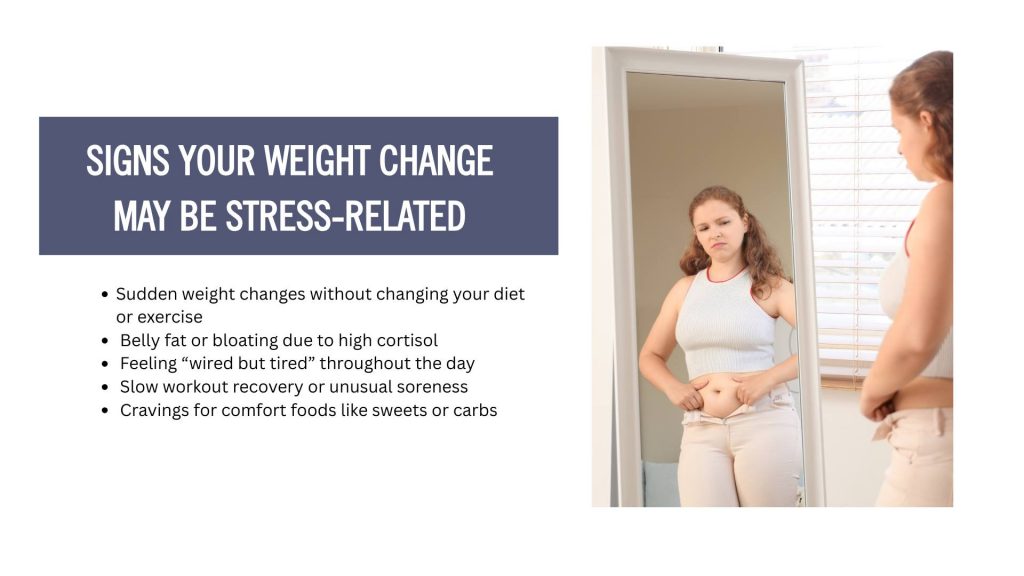
Sudden Weight Change Without Diet Changes
If you’ve noticed your weight fluctuating suddenly, even when you’re not changing your diet or exercise habits, stress could be the culprit.
Belly Fat or Bloating
When you’re stressed, cortisol can lead your body to store more fat in the abdominal area.
This happens because, evolutionarily, our bodies stored fat in the midsection as a protective measure for vital organs during stressful times.
Even today, high cortisol levels cause the body to store fat in the belly, leading to weight gain in this area.
“Wired but Tired” Feeling
When stressed, your body may feel mentally alert but physically exhausted.
This constant state of being “wired but tired” can affect your energy levels, making it harder to stay active and focused on your health.
Trouble Recovering from Workouts
Stress can affect your body’s ability to recover from physical exertion. If you’re feeling unusually sore or fatigued after your workouts, it could be due to stress hormones interfering with your recovery process.
Cravings for Comfort Foods
Stress can lead to intense cravings for high-calorie, high-sugar, or high-fat food. These comfort foods temporarily boost mood but can lead to overeating and weight gain over time.
Are you experiencing any of these signs?
If these signs sound familiar, it may be time to test your hormones. At KC Wellness, we can measure cortisol rhythm, thyroid levels, nutrients and gut inflammation, so we know exactly what your body needs.
Book a stress & weight evaluation
Get Accurate Hormone Test Results
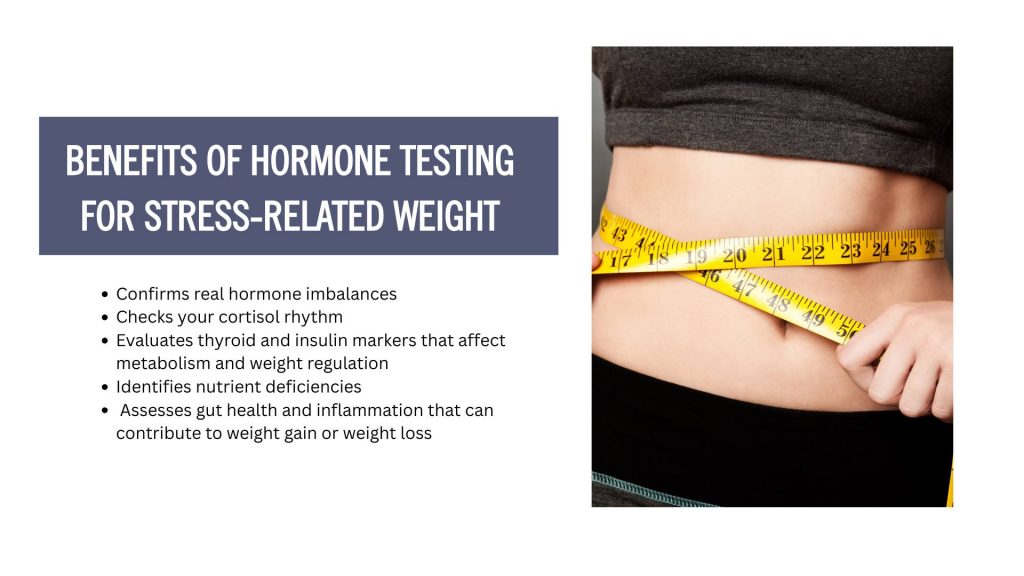
By now, you may have a clearer idea that your weight changes could be linked to stress.
If you’re wondering if that’s truly the case, testing your hormones is the most accurate way to find out.
Functional medical testing helps pinpoint hormone imbalances, nutrient deficiencies and other factors that may be contributing to your symptoms. Here are some tests your provider may request:
- Cortisol Rhythm Testing: Testing your cortisol levels at different times can show if your body is producing too much cortisol due to stress.
- Thyroid and Insulin Markers: Stress can impact thyroid function and insulin sensitivity, both of which play a critical role in weight regulation. Testing these markers can help you determine if stress is affecting your metabolism and causing weight changes.
- Nutrient Deficiencies: Stress depletes essential nutrients in the body, such as magnesium and B vitamins. Deficiencies in these nutrients can affect your energy, cravings, and overall ability to manage stress, contributing to weight changes.
- Gut Health and Inflammation: Stress can cause gut imbalances and inflammation, which are linked to both weight gain and weight loss. Testing for gut health issues and inflammation helps identify if these factors are influencing your weight changes.
The good news? You can control your weight by addressing the stress behind it.
By targeting the root causes of stress and its effects on your body, you can begin making lasting changes that lead to healthier weight management.
Here are some functional treatments that can help you regulate hormones and appetite:
Hormone Balancing Therapies
Stress affects more than just cortisol. Imbalances in other hormones, like thyroid and insulin, can slow down your metabolism and make weight loss harder.
When these hormones are out of balance, your metabolism may slow down or speed up in ways that lead to either weight gain or loss.
With hormone-balancing therapies, your body can regulate metabolism and appetite and create a healthier foundation for managing your weight.
Medically Supervised Weight Loss Programs
A weight management program that takes stress into account helps you build sustainable habits, whether you need to curb emotional eating or restore your appetite to healthy levels.
Targeted Nutrient Replenishment
Chronic stress depletes nutrients like magnesium, B vitamins and vitamin C, all of which help support energy levels and metabolic function. IV therapy helps replenish these essential nutrients, which not only support your energy and mood but also help regulate your body’s processes, whether you’re struggling with overeating or fatigue-induced weight loss.
By focusing on these specific treatments, you can rebalance cortisol and metabolism, making it easier to manage your weight and overall health.
Your weight is not your fault; it’s your biology.
Stress can alter hormones and metabolism, but with proper testing and the right treatment, healing is possible.
Our medical team can test your cortisol levels, support your metabolism, and help you feel like yourself again.
Book a stress & weight consultation
Talk to a KC Wellness provider

Dr. Rahul Kapur, M.D. is a board-certified family medicine physician with a dedicated passion for integrative medicine and a deep knowledge of functional medicine. He was named intern of the year at Wesley Medical Center in Wichita, KS, and has been practicing as a hospitalist for over a decade. He has successfully helped many patients in Kansas City with his specialized IV bags, ketamine therapy, hormone optimization and weight loss therapy methods.
