
Weight gain during menopause happens because declining estrogen and progesterone levels directly affect how the body regulates metabolism, fat storage and energy use. Even if diet and exercise remain consistent, hormonal shifts can change how efficiently the body burns calories and where fat is stored.
This article explains the key biological reasons for menopause-related weight gain and what happens in the body during this transition.
Here are some of the reasons why you might be gaining weight during menopause.
Decline in estrogen and progesterone
A decline in estrogen and progesterone during menopause directly impacts how the body regulates metabolism, fat storage and energy balance. These hormonal shifts reduce metabolic efficiency and influence how the body distributes and stores fat, which can lead to gradual weight gain even without changes in diet or activity.
Slower metabolic regulation
During menopause, metabolic regulation slows due to hormonal changes and age-related reductions in muscle mass. This means the body burns fewer calories at rest and uses energy less efficiently, which can contribute to gradual weight gain over time.
Changes in fat distribution
Menopause changes how the body stores fat due to declining estrogen levels, which influence fat distribution patterns. As a result, fat is more likely to accumulate around the abdomen rather than being distributed evenly throughout the body.
Reduced energy efficiency
During menopause, the body becomes less efficient at converting food into usable energy due to hormonal fluctuations and metabolic changes. This reduced energy efficiency means more calories may be stored as fat rather than used for daily functions.
Why am I gaining weight during menopause, even though I haven’t changed my diet or exercise?
You may gain weight during menopause even without changing your habits because hormone fluctuations affect how the body processes food and stores energy. The body becomes more efficient at conserving energy, meaning fewer calories are burned at rest.
This shift is not related to discipline or effort but to biological changes that influence metabolism, insulin sensitivity, and appetite regulation.
Reduced resting metabolic rate
A reduced resting metabolic rate during menopause means the body burns fewer calories at rest than it did before. This occurs due to hormonal changes and natural age-related shifts in muscle mass, both of which influence how efficiently the body uses energy throughout the day.
As a result, even if food intake and activity levels stay the same, the body may begin to store more calories as fat over time.
Increased fat storage efficiency
Increased fat storage efficiency means the body is more likely to store excess energy as fat rather than use it for fuel. During menopause, hormonal changes, especially declining estrogen, can influence how and where fat is stored.
This increased fat storage is one of the main reasons for weight gain during menopause, even when diet and exercise habits remain unchanged.
Hormonal impact on appetite signals
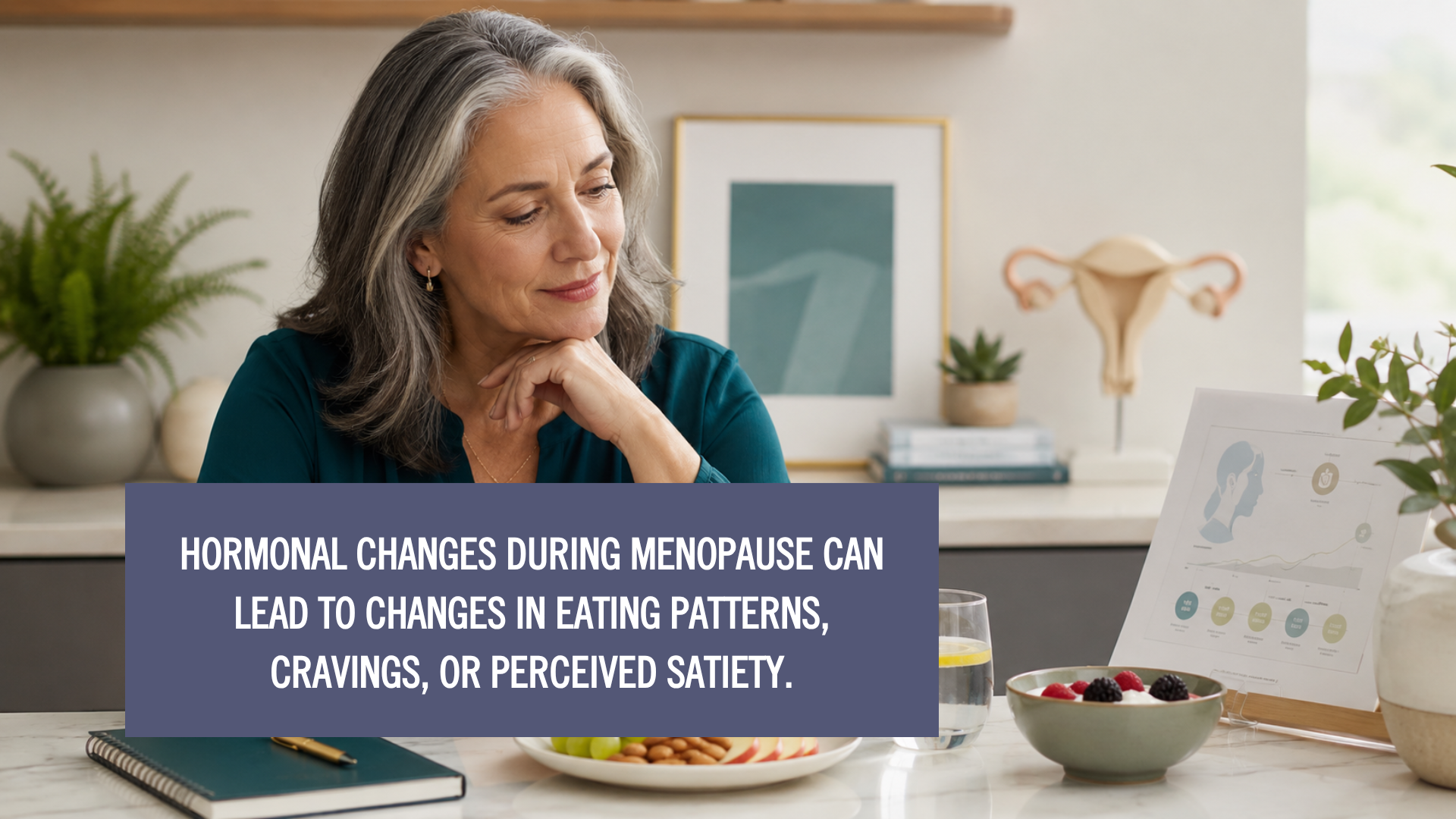
Hormonal changes during menopause can affect appetite regulation by altering signals related to hunger and fullness. This can lead to changes in eating patterns, cravings, or perceived satiety even without intentional dietary changes.
These shifts are driven by internal hormone fluctuations rather than behavioral changes.
Changes in insulin response
Changes in insulin response during menopause can affect how the body processes carbohydrates and regulates blood sugar. When insulin sensitivity decreases, the body may store more glucose as fat rather than using it efficiently for energy.
Over time, this can contribute to gradual weight gain and difficulty maintaining previous weight levels.
Why does estrogen loss cause weight gain during menopause?
Estrogen plays a key role in regulating metabolism, fat distribution, and insulin sensitivity. According to a review published in the National Library of Medicine, estrogen decline during menopause is associated with increased abdominal fat accumulation, changes in glucose regulation, and reduced energy expenditure, all of which can contribute to midlife weight gain.
- Increased abdominal fat storage
- Reduced metabolic regulation
- Changes in glucose processing
- Shift in body composition
Why does menopause slow down metabolism and cause weight gain?
Metabolism naturally slows during menopause due to hormonal changes and age-related loss of muscle mass. Since muscle tissue burns more calories at rest than fat, reduced muscle mass lowers daily energy expenditure.
This combination of hormonal and muscular changes makes it easier for weight to accumulate over time.
- Loss of lean muscle mass
- Lower resting calorie burn
- Reduced energy expenditure
- Gradual metabolic slowdown
Why does insulin resistance during menopause lead to weight gain?
Insulin resistance can develop during menopause as hormonal shifts affect how the body processes glucose and regulates energy storage. When insulin sensitivity decreases, the body is less efficient at using glucose for energy and is more likely to store excess energy as fat.
According to a review published in Gynecological and Reproductive Endocrinology & Metabolism (GREM), the menopausal transition is associated with a physiological increase in insulin resistance, which contributes to central fat accumulation, increased risk of metabolic syndrome, and changes in body composition. The study also highlights that abdominal (visceral) fat becomes more metabolically active and more prone to fat storage during this stage of life.
Why does stress make weight gain worse during menopause?
Stress can contribute to weight gain during menopause by increasing cortisol levels, which influence appetite, cravings, and fat storage.
Chronic stress can also disrupt sleep, which further impacts metabolic regulation and hunger signals.
- Elevated cortisol levels
- Increased abdominal fat storage
- Appetite and craving changes
- Sleep disruption
Why does traditional dieting stop working during menopause?
Traditional dieting often becomes less effective during menopause because weight regulation is no longer driven solely by calories. Hormonal changes, metabolic slowdown and sleep disruption all influence how the body responds to diet and exercise.
This is why many women notice that previous strategies no longer produce the same results.
- Hormonal influence on metabolism
- Reduced muscle mass
- Insulin sensitivity changes
- Sleep and recovery disruption
Why am I gaining weight during menopause? Key signs that hormones are involved
Hormonal weight gain during menopause is often accompanied by other symptoms that appear together and gradually worsen over time. These changes reflect underlying shifts in hormone balance and metabolic function.
- Unexplained weight gain
- Increased abdominal fat
- Fatigue or low energy
- Brain fog
- Sleep disturbances
- Mood changes
- Difficulty losing weight
Why does menopause cause overall body composition changes?
Menopause changes body composition by reducing muscle mass and increasing fat storage tendencies due to hormonal shifts. These changes affect how the body looks and feels, even if total weight does not increase significantly.
The result is often a shift toward a higher body fat percentage and reduced lean muscle mass.
- Reduced lean muscle mass
- Increased fat percentage
- Changes in fat distribution
- Slower recovery and energy output
Why am I gaining weight during menopause, and what can I do about it?
Weight gain during menopause can be evaluated and managed by identifying underlying hormonal, metabolic and lifestyle factors. A comprehensive medical approach helps determine what is contributing most to the changes.
Treatment may involve hormone evaluation, metabolic assessment and personalized lifestyle or medical strategies.
- Hormone testing
- Metabolic evaluation
- Nutrition review
- Lifestyle assessment
- Personalized treatment planning
Can medical weight loss help with menopause weight gain?
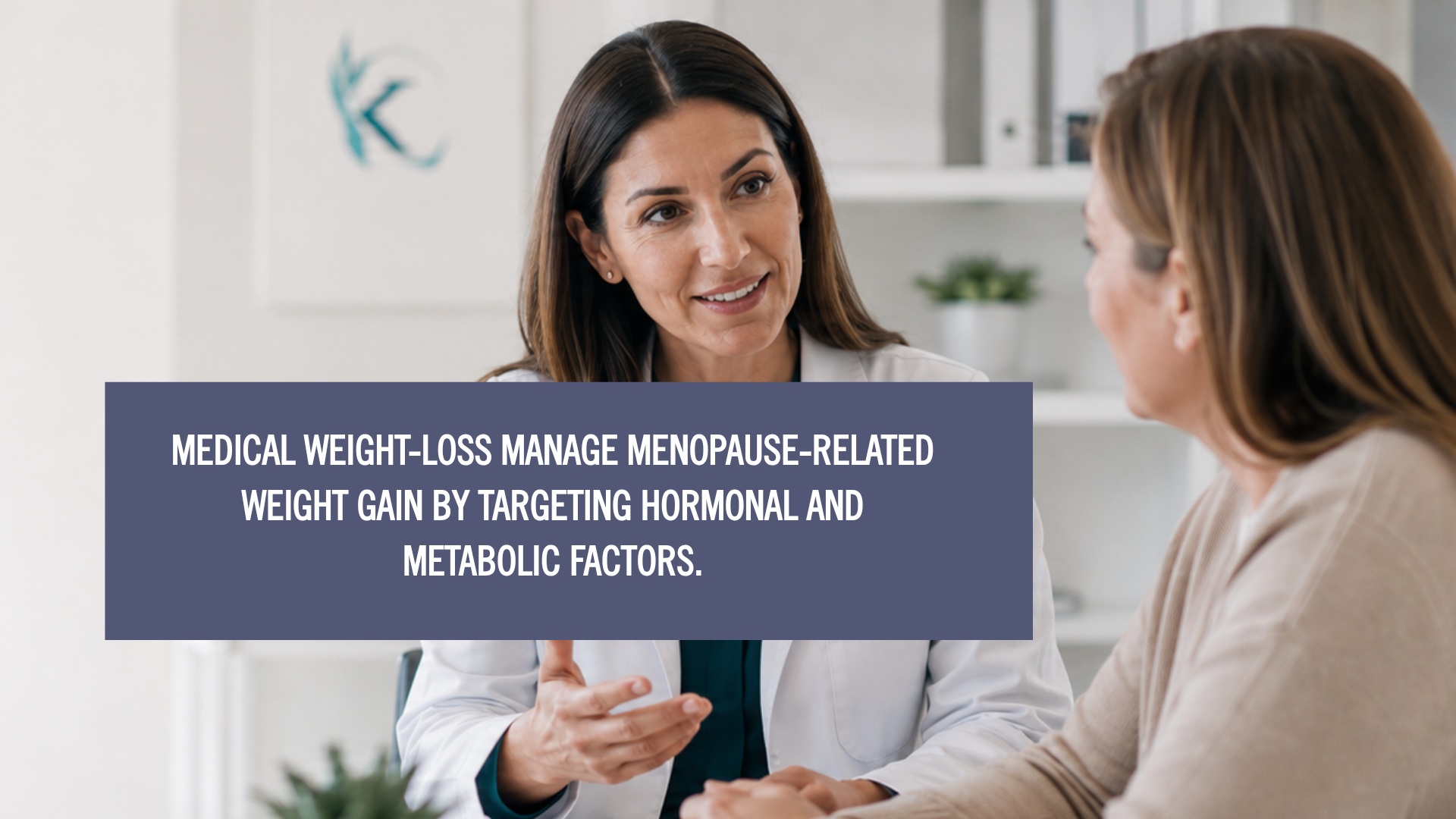
Yes. Medical weight-loss programs can help women lose weight during menopause by addressing the biological changes that make weight management more difficult.
Unlike traditional dieting alone, medical weight loss accounts for hormonal changes, metabolic slowdown, insulin resistance, appetite regulation, and overall health. Treatment is personalized based on your medical history, symptoms, and weight-loss goals.
Depending on your individual needs, a provider may recommend:
- Comprehensive metabolic evaluation
- Nutrition and lifestyle guidance
- Hormone evaluation when appropriate
- Prescription weight-loss medications, including GLP-1 medications if medically indicated
- Ongoing monitoring and adjustments to support long-term success
Medical weight loss is not about replacing healthy eating and exercise. Instead, it works alongside lifestyle changes to help overcome the biological barriers that often develop during menopause.
Take Control of Menopause-Related Weight Changes With Personalized Care
If you are experiencing unexplained weight gain during menopause, KC Medical & Wellness Center can help identify whether hormonal or metabolic changes are contributing to your symptoms. A personalized, medical weight-loss program can help address root causes and support long-term health.
Talk with a provider about your symptoms. Book a consultation to learn what your body needs.
Frequently Asked Questions
Can menopause cause weight gain even if nothing changes?
Yes. Hormonal changes can alter metabolism, fat storage and energy regulation even without lifestyle changes.
Why does menopause cause belly fat?
Declining estrogen levels influence fat distribution, often leading to increased abdominal fat storage.
Is weight gain during menopause inevitable?
No. While hormonal changes influence weight, a personalized medical evaluation and treatment can help manage or reduce these effects.
Can hormone levels affect metabolism?
Yes. Hormones regulate metabolism, appetite and energy storage.
Should hormone testing be done during menopause?
Hormone testing may help identify underlying causes of symptoms such as weight gain, fatigue, or sleep disruption.

Dr. Rahul Kapur, M.D. is a board-certified family medicine physician with a dedicated passion for integrative medicine and a deep knowledge of functional medicine. He was named intern of the year at Wesley Medical Center in Wichita, KS, and has been practicing as a hospitalist for over a decade. He has successfully helped many patients in Kansas City with his specialized IV bags, ketamine therapy, hormone optimization and weight loss therapy methods.
